Cheap AI vs Premium AI Minimax 2 5 vs Opus Full Breakdown
Summary
This video gives you a real-world, unscripted comparison between Minimax 2.5 and Claude Opus when used as AI agents inside OpenClaw. The hosts run a simple logic test — should you walk or drive 50 meters to a car wash? — and use the results to illustrate a core problem with cheaper models: inconsistency. One host's Minimax 2.5 agent (Jeff) says walk, while the Opus agent (Tony Stark) correctly says drive. The point is not that Minimax always fails, but that you cannot rely on it to get the same answer every time. One host has been running Minimax 2.5 for nearly two weeks and shares his honest take: it is good enough for grunt work, especially when you are still learning and want to control costs. He keeps everything on manual — no cron jobs, no full autonomy — because he wants to verify results before trusting the model completely. This is framed as the right approach for someone still figuring out their architecture rather than someone with a polished, production-ready system. The cost difference is significant. Minimax 2.5 offers an all-inclusive coding plan with 300 requests every five hours for around $20, while the Opus setup runs one host about $5 per day, which adds up fast. If you are early-stage and experimenting, Minimax can deliver solid value as long as you stay in the loop and give it feedback. The hosts also make an important point about OpenClaw in general: it works best if you already have a pre-existing workflow or system that you want to automate and accelerate. If you do not have a clear system or cannot articulate your process as an architecture, you will struggle regardless of which model you use. The overall verdict is nuanced. Minimax 2.5 is inconsistent but cheap and useful for learning. Opus is expensive but reliable — it rarely fails, though when it does, the failure is severe and requires clearing its entire memory. The hosts plan future tests with Kimi and GLM5 to give you a fuller picture across more models.
Related Videos
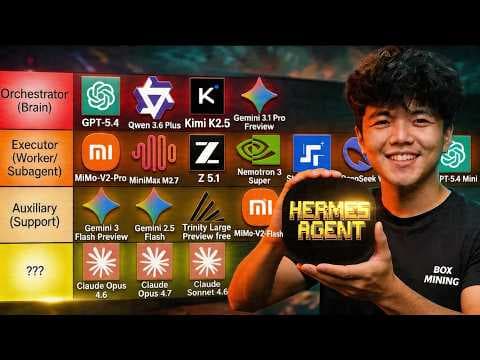
Top AI Models for Hermes Agent (Tier List)

Opus 4.7 is disappointing
Anthropic releasing Opus 4.7 TOMORROW?

Claude Opus is ACTUALLY UNUSABLE

Muse Spark: Meta Unleashes NEW AI Model (Are they back?)