Is Kimi AI Even Good for OpenClaw? (SHOCKING Results)
Summary
This video gives you a quick but honest breakdown of Kimi AI as a model option for OpenClaw and general programming tasks. The core argument is simple: Kimi is extremely cheap — running at roughly 5-10% of the cost of top-tier US models like Claude Opus or GPT-4. With standard API pricing around 45 cents per million input tokens, and cached usage dropping as low as 10 cents per million tokens, Kimi is one of the most cost-effective options available right now. If you are running repetitive tasks or anything that benefits from prompt caching, Kimi can deliver serious savings. The video walks you through Kimi's paid plan — the Allegretto tier at $40 per month — which includes generous quotas and access to Kimi's agent swarm feature, where you can deploy multiple agents simultaneously to handle tasks in parallel. The hosts did purchase this plan, though they admit their first impression was shaped by disappointment with Kimi Claw, which they found significantly less polished than alternatives like Max Claw. The honest take on Kimi's intelligence is the most useful part of the video. The hosts frame Chinese models like Kimi and MiniMax as 'excellent test takers' — they benchmark well, score high on standardized evals, and can execute tasks reliably when given clear documentation and structured instructions. However, for complex architecture decisions, open-ended problem solving, or situations where creative reasoning matters, Claude Opus still outperforms them noticeably. The practical advice: use Kimi or MiniMax for data management and routine task execution, but switch to a more capable model when you hit a hard architectural or reasoning challenge. One feature the hosts have not yet tested is Kimi's visual-language capability — built by combining a visual model with a text model during post-training — which could make it powerful for video or image-heavy workflows. They plan to test and cover this in a future video. To experiment with Kimi and other models yourself, the hosts recommend OpenRouter, where you can access API endpoints and top up with minimal credits to find the model that works best for your use case.
Related Videos
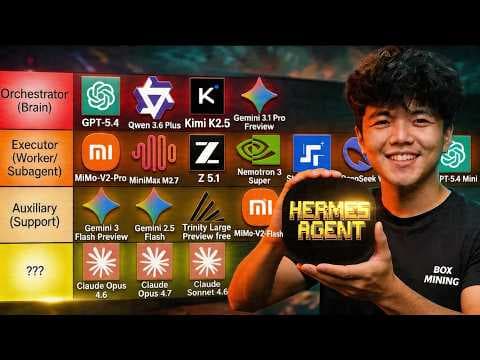
Top AI Models for Hermes Agent (Tier List)

Opus 4.7 is disappointing

Anthropic releasing Opus 4.7 TOMORROW?

Claude Opus is ACTUALLY UNUSABLE

Muse Spark: Meta Unleashes NEW AI Model (Are they back?)