Comparing Minimax 2.5 vs Claude Opus in OpenClaw
Summary
If you're trying to decide which AI model to use in OpenClaw, this video gives you a real-world comparison of Minimax 2.5 versus Claude Opus — not based on benchmarks, but on actual daily use. The hosts ran two setups side by side: Claude Opus powering bots named Stark and Banner, and Minimax 2.5 powering a bot named Jeff. The results were not close. Claude Opus consistently delivered on tasks like daily news briefings, matched previous presentation styles, and added proactive touches without being asked. Minimax 2.5 struggled with basic scheduling — failing to set up a cron job correctly and never delivering a 7am briefing as instructed. The hosts estimate Minimax 2.5 performs at roughly 60-70% of Opus quality in real-world use, not the 95% that Minimax's own benchmarks claim. The cost difference is significant: Minimax 2.5 is available on plans starting at $10-20/month, while the team's Opus usage runs $30-60 per day, which adds up to around $1,800 per month. Whether that premium is worth it depends entirely on your use case. One important nuance: AI models are inherently inconsistent — the same prompt can produce different results each time, like a slot machine. To work around this, you can run the same prompt multiple times and pick the best output rather than relying on a single attempt. Another factor to watch is context window size: a community member noted that Minimax 2.5 performs reasonably well under 120k context tokens, but degrades sharply beyond that threshold. The hosts plan to keep testing Minimax 2.5 to see if better prompt engineering or tuning can close the gap, since some community members have reported good results with it. Bottom line: if reliability and quality matter for your OpenClaw agents, Opus is the stronger choice — but it comes at a serious cost.
Related Videos
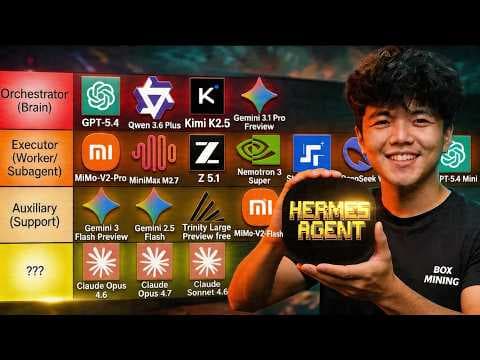
Top AI Models for Hermes Agent (Tier List)

Opus 4.7 is disappointing

Anthropic releasing Opus 4.7 TOMORROW?

Claude Opus is ACTUALLY UNUSABLE

Muse Spark: Meta Unleashes NEW AI Model (Are they back?)