Top AI Models to CHOOSE (Intelligence Comparison)
Summary
This video gives you a practical, opinionated breakdown of the top AI models available in February, covering both US and Chinese releases. The host has been hands-on with nearly every major model and shares where he actually spends his money and why. On the US side, the two standout models are Claude Opus 4.6 and OpenAI's GPT with Codex. Opus is described as the best all-around coding model — chatty, thorough, and reliable — while GPT gets things done more quietly. Both are expensive, and Gemini is largely dismissed as not keeping up. Grok gets a mention for daily use thanks to its X/Twitter integration and real-time data, but it falls short for serious coding work. On the Chinese side, you have a wave of new releases — Minimax, Kimi, and GLM5 — driven partly by teams shipping before Chinese New Year. These models are dirt cheap and capable of roughly 95% of what frontier US models offer. The host finds them inconsistent in practice, though, which is why he keeps coming back to Opus for anything critical. The cost-to-quality gap between US and Chinese models has narrowed dramatically, but reliability still matters when you're building something real. For budget-conscious builders, Minimax stands out. Its coding plan at around $20/month gives you 300 prompts every 5 hours — generous enough for agent workflows without the headache of rate limits. Kimi's agent swarm feature is interesting but pricier. If you want to experiment across models without committing, OpenRouter lets you test everything in one place. The host's personal recommendation breaks down clearly: for learning AI or small personal tools, Minimax's paid plan is more than enough. For mission-critical work, go with Opus or GPT. For privacy-sensitive tasks or if you want to avoid subscription fees entirely, running local models via Ollama is a solid alternative that gets you around 80% of frontier performance on your own hardware.
Related Videos
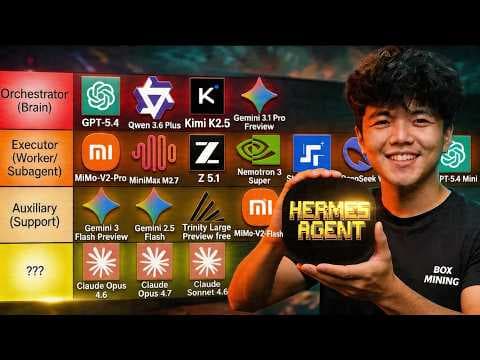
Top AI Models for Hermes Agent (Tier List)

Opus 4.7 is disappointing
Anthropic releasing Opus 4.7 TOMORROW?

Claude Opus is ACTUALLY UNUSABLE

Muse Spark: Meta Unleashes NEW AI Model (Are they back?)